Reflections on Kayitz 2026 from Rabbi Gordon Tucker
Rabbi Gordon Tucker shares these reflections on his experiences with us at Camp Ramah New England during kayitz (summer) 2026:
What keeps an old-timer like me (I was the oldest person in camp this year) coming back to Ramah in New England for 2-3 weeks each summer? There is the beauty of Western Massachusetts, of course, and the greater proximity to the baseball cathedral next to the Fenway. This year, especially, there was the excitement of seeing all the physical renewal happening at camp (a state of the art Arts Center, and an equally dazzling new “Marp”). But none of these factors are as important as the people. One of the prerogatives of being a veteran of 24 summers is the opportunity to befriend, work beside, and teach campers, the college students who care for them, the senior staff, and even the various adults who visit camp on weekends.
The overall educational theme this past summer was “God” (recognizing that we tend to devote so much emphasis to Jewish history, contemporary events in North America and Israel, and Jewish peoplehood, that the starting point of the people Israel, its belief in a covenant with God, often gets short shrift). The prodigiously talented and devoted education staff I was part of (led by the ultimate New England veteran Rabbi Elliot Goldberg) rose to the task, and there was a palpably higher spiritual flavor to camp in the summer of 2026, with people of many ages discussing midrashim, faith and challenges to it, and why it all matters in the 21st century. All of this buzz could be heard in classes, in informal discussions, and in the “harga’ot” that cap the days as bunks slip into nighttime rest.
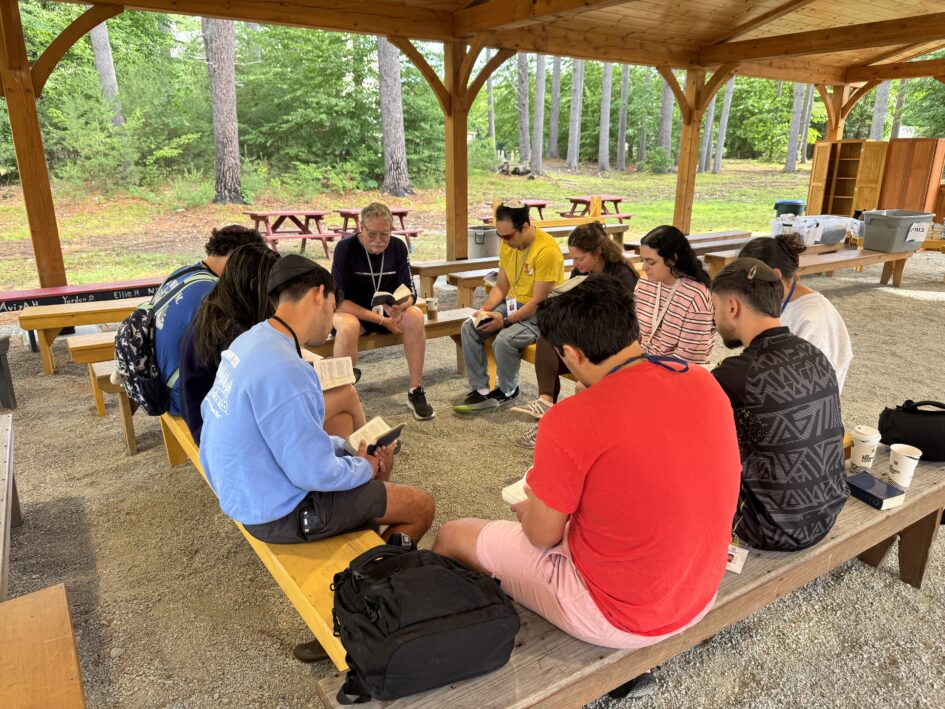
My senior status also made me aware of the responsibilities that my generation has to pass on whatever wisdom has accrued to us about our tradition. For that reason, I spent one of my weeks with about a dozen of the Nivonim (the oldest Edah, rising high school juniors) teaching them the Torah that I learned from my teachers. They were thus introduced to some of the best of the late Drs. Yohanan Muffs, Gerson Cohen, Abraham Joshua Heschel, and, yibadel le-hayyim, my younger contemporary Benjamin Sommer (from whom I have also gained much knowledge). These teenagers learned a lot about the kind of highly relevant scholarship that happens at JTS (and hopefully that planted some seeds for future associations with my alma mater), but also about the ethic of “Torah Le-Lamdah”, that is, Torah one studies in order to pass it on to another generation. In a striking metaphor, the rabbinic tradition imagined that when great teachers are quoted and their words studied, even if they are deceased, their lips are, in effect, still moving and touching our minds and hearts. That happens often at Ramah, and it did so especially in those sessions with the teens.
And then there was one more responsibility I sensed, which was to give the large number of young counselors just beginning their adult lives a consciousness of the enormous opportunity that they have to address the fractures in our world. On the Shabbat of Staff Week, before the campers arrived, I acknowledged within my D’var Torah that my generation was bequeathing to them a world terribly polarized and devoid of much empathy and humility. That they did not ask for such a world is true, and unfair. But I pointed to what Heschel taught us about the most fundamental and existential need that humans of all ages have. It is the need to be needed. And I asked them to see to what a profound degree they are now needed. They are, I insisted, among the most important and consequential generations this country, this Jewish world, this planet, has ever had. It is in part for charges like this that Jewish camp exists. And we trust that they will take it to heart, because the health of this 250 year old nation and that of a beloved 78 year old nation across the sea depend on them. What a privilege to be able to address critical issues with extraordinary young people in the midst of the bright and fun-filled summer days at camp!
Rabbi Gordon Tucker is a leading scholar of Conservative Judaism, and he’s been an influential teacher and educator at Camp Ramah New England all the way back to 1987. As vice chancellor for Religious Life and Engagement at The Jewish Theological Seminary, Rabbi Tucker focuses on enhancing Jewish life at JTS.